
InterceptIR gas detector
Flir Systems
Capable of recognizing over 5,600 substances, this device measures concentrations, records GPS positions, and transmits data in real-time to the control center.
A high-performance FTIR gas detector designed to identify over 5,600 gaseous chemical compounds and toxic vapors with a good precision.
Advantages
Portable FTIR analyzer capable of identifying over 5,600 chemical gases and toxic vapors.
Presence detection, type identification, concentration measurement, and precise GPS geolocalization.
Real-time data transmission to control centers or dedicated mapping applications.
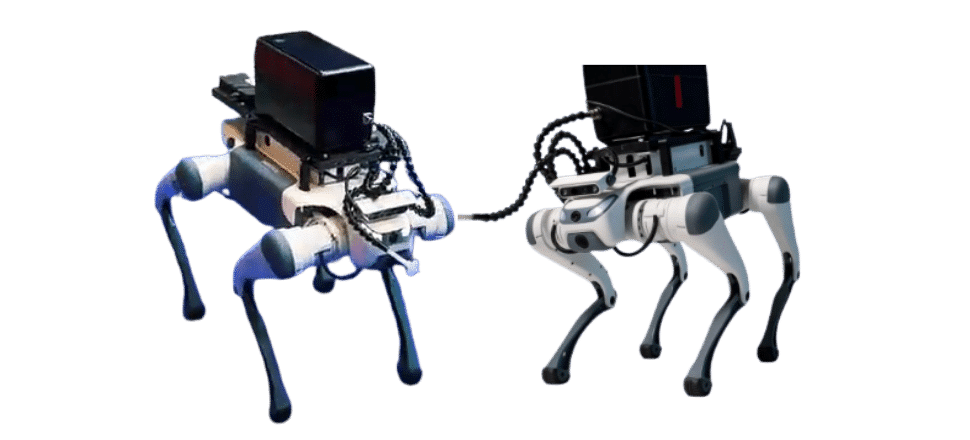
Seamless robotic integration (e.g., AYBARS quadruped) for access to hazardous or inaccessible zones.
Interactive mapping of contaminated areas with automatic location marking.
HTDS offers the InterceptIR, an ultra-high-performance FTIR gas detector designed to identify over 5,600 chemical compounds and toxic vapors with exceptional precision. This advanced infrared spectroscopic technology analyzes the unique molecular signatures of each gas, providing positive identification, concentration measurement, and precise GPS localization in just a few seconds. The InterceptIR excels in detecting CBRN threats, industrial leaks, and environmental pollution, instantly transmitting data to command centers or mobile applications.
Compact and rugged, the InterceptIR integrates perfectly with intervention robots such as the AYBARS quadruped, entering inaccessible or hazardous areas to perform systematic scans without exposing human operators. With this device, HTDS provides real-time mapping of contaminated zones, automatically marking locations on interactive maps for optimal coordination of emergency responses. Its extensive database and advanced analysis algorithms ensure maximum reliability, even under extreme operational conditions.
Technology: FTIR spectroscopy (Fourier Transform Infrared).
Capacity: Identification of >5,600 chemical gases and toxic vapors.
Measurements: Presence, gas type, concentration, and GPS position.
Transmission: Wireless to control center or mobile app in real-time.
Integrations: AYBARS quadruped robots and interactive mapping systems.
Applications: Military CBRN, disaster emergency response, industrial, and environmental.
Connectivity: Continuous network between the robot and the command center.
CBRN Interventions: Detection of chemical warfare agents and toxic industrial substances.
Emergency/Disaster Management: Identification of chemical leaks in inaccessible zones.
Industrial Monitoring: Gas leak detection for factories, refineries, and chemical plants.
Environmental Protection: Monitoring of gaseous pollution and contamination prevention.
Military Security: Reconnaissance of chemical threats without human exposure.